Walking, Hiking & Climbing in the French Alps
The expansive and dynamic landscape of the French Alps offers breathtaking scenery, crisp fresh air, and pristine crystal-clear lakes—making it an idyllic destination for walking, climbing, and hiking enthusiasts alike.
Exploring the French Alps in the summer offers an unforgettable experience. The region's diverse terrain, from lush valleys to rugged peaks, provides a plethora of trails for hikers of all levels. Whether you're seeking gentle strolls through alpine meadows or challenging ascents to panoramic summits, the French Alps have it all. Along the way you'll encounter picturesque villages, stunning mountain vistas, and abundant wildlife.
Our team have put together some of their favourite places to explore alongside recommended accommodation for you below. If you would like to know more, including other places to stay and rates, call our friendly team of Alpine experts on 023 9283 9310 who will be happy to help you find a perfect holiday in the French Alps.
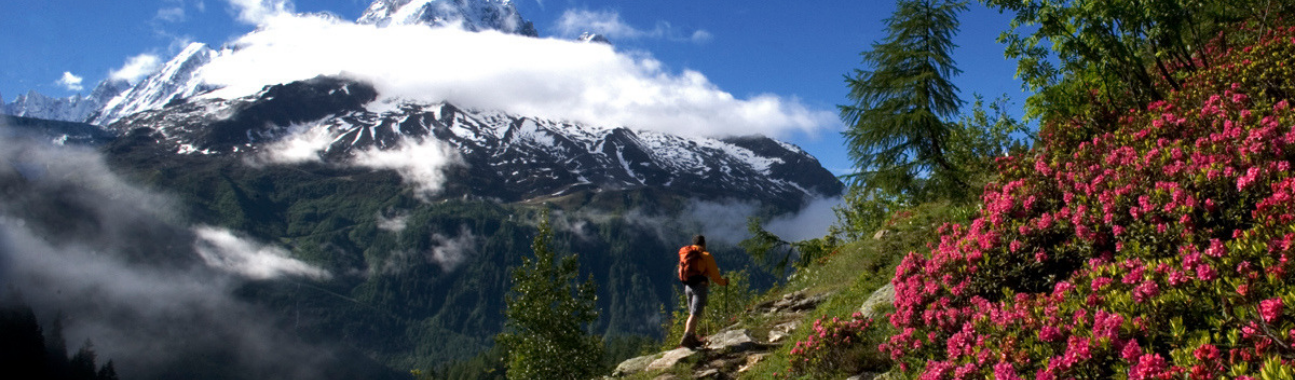
Walking in the French Alps - try Portes du Soleil!
Family vacations in the mountains are an opportunity to recharge your batteries, enjoy the splendid landscapes and breathe the fresh air. It is also a great playground to exercise and discover splendid summer landscapes at the bend of a path. Hiking and trekking with the family (or in a more sporty way) is a great way to discover the Portes du Soleil area for instance, its numerous summits and its sumptuous landscapes during a hike in Haute-Savoie, or in Lake Geneva, in the heart of the Alps. The area offers 800km of marked trails and 27 ski lifts to make it easy to climb the peaks.
Portes du Soleil has also developed the *Multi-Pass product which is a card that gives you unlimited access to more than 60 activities including pedestrian lifts… If you want to hike, you can take a tour of the Portes du Soleil, or go for a family walk along a lake, or even climb one of its peaks! The Portes du Soleil have published the hiking map for sale in the Tourist Offices of all the Portes du Soleil resorts: d’Abondance, Avoriaz 1800, Champéry, Châtel, La Chapelle d’Abondance, Les Gets, Montriond, Morgins, Morzine-Avoriaz, St Jean d’Aulps, Torgon and Val-d’Illiez Les Crosets Champoussin.
* you can enjoy unrestricted activities for all the family for just €3 per day (under 5's free). The Multi-Pass means a never-ending choice of around 70 unlimited activities available in the Portes du Soleil area! Just one card offers you a multitude of activities at a very competitive price. There are Multi-Pass formulas to suit everyone’s needs: the holiday Multi-Pass for those who are staying at a Multi-Pass host, the day Multi-Pass, for the occasional walker, or the season Multi-Pass for those who live near the Portes du Soleil. It’s on sale at the ski lift ticket offices.
Recommended stays...

Les Chalets d'Angele, Chatel is 800m walk to the village. Facilities include a pool, hot tub, sauna, steam room and fitness room.

Résidence Annapurna, Les Gets offers everything needed for a comfortable and convenient holiday including a pool, spa and wellness centre!

Hotel Le Petit Dru, Morzine is located 400m from the village centre and is family run with indoor and outdoor pools
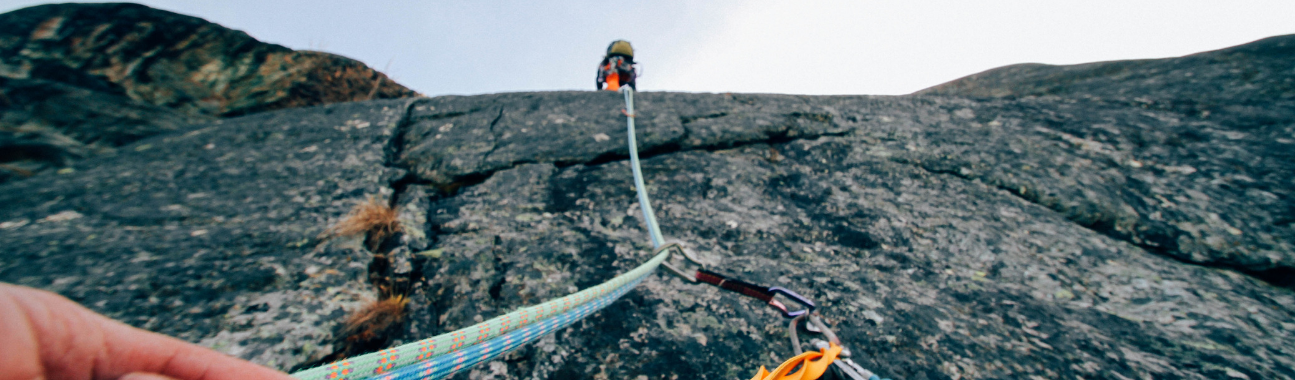
Climbing in the French Alps
Top roped for safety, clinging to training faces! Thrilling! Instructors are available to help you climb up and abseil down the rock faces safely using harnesses and ropes. Each climbing area will have a number of graded routes to cater for all abilities from beginners to the more advanced. In most resorts, children need to be 8 or older to participate. Our recommendation is to head to Les 2 Alpes where there is also an Adventure Parc in nearby Venosc to climb in or, for the serious climbers, head to Chamonix, a world-class area for mountaineering and rock climbing that is dominated by Mont Blanc. The Mont Blanc Massif has 27 peaks over 4,000m. It's also known for its granite towers (Aiguilles) that line the southern side of the valley and on the northern side of the valley are the Aiguilles Rouge Mountains, which are more accessible from Chamonix via a series of ski lifts or nearby car parks.
Recommended stays...

Lodge, Les 2 Alpes is located in a bustling part of the resort and has its own pool. The chalets sleeps up to 14 and is ideal for large parties

Alpen, Les 2 Alpes are ideal for large groups and feature a sauna, steam room and hot tub. Each chalet sleeps up to 12 people!

Isatis, Chamonix enjoys a peaceful location near the golf course and is less than 5kms from the centre of the bustling resort. Offers superb 360° views of Mont Blanc and the surrounding peaks.

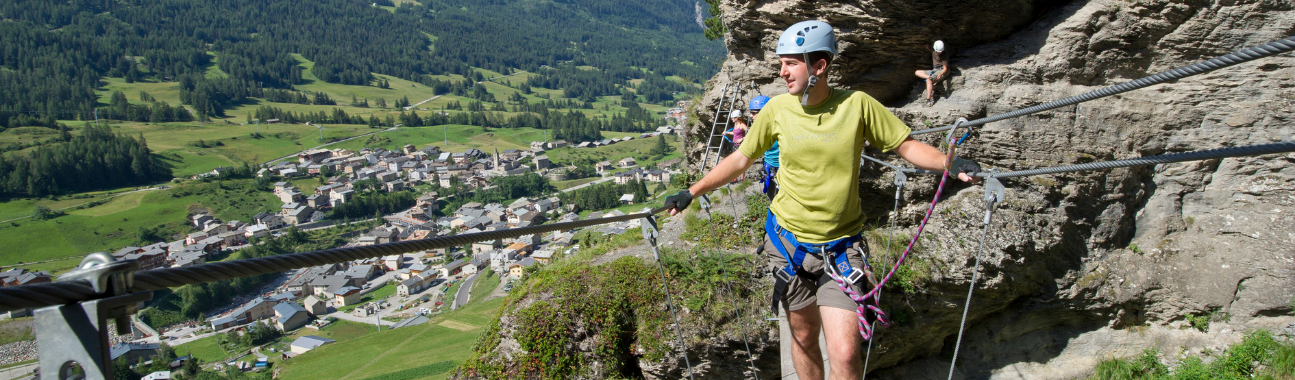
Via Ferrata in the French Alps
A challenging and demanding combination of scrambling and climbing rockfaces with man-made courses of pegs and cables, fixed ropes, ladders and handrails. They vary in length and difficulty to suit most people’s appetites for adventure, and some sites have special courses for children. Helmets and harnesses are provided for safety. Our experts recommend trying the Via Ferrata in Les Saisies or Aussois.
Recommended stays...

Le Hameau du Beaufortain, Les Saisies is a prestige residence located 2km from the resort centre. It is situated in a tranquil forest setting offering superb views.

Flocons d’Argent, Aussois is ideally located. There are a restaurant and a shop selling local products both within the residence building as well as a mini-market, boulangerie and a snack-bar within 200m.

Amaya, Les Saisies is located overlooking the lower part of les Saisies, and just a 15-minute walk from the centre. It features a leisure area with indoor pool, sauna, hammam, hot tub...
Ready to book your summer holiday? Need some advice? Have a look at our summer offers, browse our Alpine resorts, then call our team on 023 9283 9310 or request a quote and we will help you get summer sorted!